

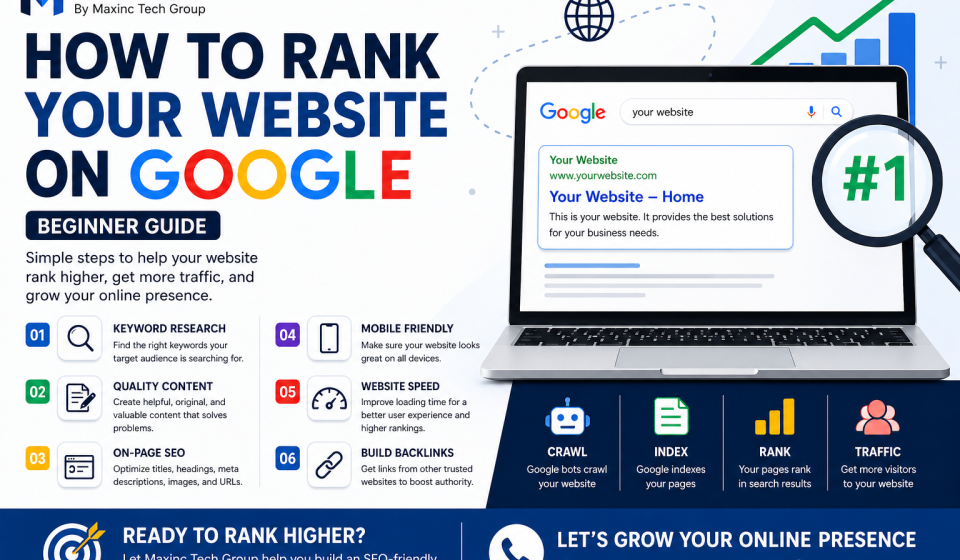

Getting your website to appear on Google is one of the most important steps in building an online presence. Whether you run a business, blog, or portfolio site, ranking on Google helps you attract visitors, generate leads, and grow your brand without paying for ads.
The good news is that you don’t need to be an expert to start ranking. You just need to understand a few key principles of Search Engine Optimization (SEO) and apply them consistently.
In this guide, we’ll break down the basics in a simple, practical way.
1. Understand How Google Works
Google uses automated systems called crawlers to scan websites, understand their content, and decide which pages should appear in search results.
To rank well, your website must be:
- Easy to crawl
- Relevant to user searches
- Trustworthy and valuable
If Google understands your site clearly, your chances of ranking improve significantly.
2. Choose the Right Keywords
Keywords are the words people type into Google when searching.
For example:
- “web developer in Kenya”
- “how to create a website”
- “affordable website design”
To rank, you need to target keywords that:
- Match your content
- Have search demand
- Are not too competitive (especially for beginners)
👉 Use keywords naturally in your:
- Page titles
- Headings
- Content body
- URLs
3. Create High-Quality Content
Content is the foundation of SEO. Google prioritizes pages that answer user questions clearly and thoroughly.
A good blog or page should:
- Solve a specific problem
- Be easy to read
- Include examples or steps
- Be original (not copied)
The more helpful your content is, the more likely it is to rank.
4. Optimize On-Page SEO
On-page SEO means improving elements inside your website.
Key areas include:
- Title tags (your main headline on Google)
- Meta descriptions (short summary under the title)
- Headings (H1, H2, H3) for structure
- Image alt text
- Internal links to other pages on your site
These help Google understand your content better.
5. Make Your Website Mobile-Friendly
Most users in Kenya and globally browse using mobile devices. If your website is not mobile-friendly, you will lose rankings.
Ensure:
- Responsive design (adjusts to screen size)
- Fast loading on mobile
- Easy navigation
Google prioritizes mobile-friendly websites in search results.
6. Improve Website Speed
A slow website hurts both rankings and user experience.
To improve speed:
- Compress images
- Use a lightweight theme
- Limit unnecessary plugins
- Use caching tools
A fast website keeps users engaged longer, which improves SEO performance.
7. Build Backlinks (Very Important)
Backlinks are links from other websites pointing to yours. They act as “votes of trust” in Google’s eyes.
You can get backlinks by:
- Writing guest posts
- Sharing content on social media
- Listing your business in directories
- Creating valuable content others want to reference
The more quality backlinks you have, the stronger your ranking potential.
8. Use Google Tools
To track and improve your SEO, use:
- Google Search Console – to monitor performance and indexing
- Google Analytics – to understand visitor behavior
These tools help you see what’s working and what needs improvement.
Final Thoughts
Ranking on Google is not an overnight process. It requires consistency, quality content, and ongoing optimization.
If you focus on:
- Good keywords
- Helpful content
- Technical optimization
- And backlinks
Your website will gradually grow in visibility and traffic.
Need Help Ranking Your Website?
At Maxinc Tech Group, we specialize in building and optimizing websites that are designed to rank on Google and attract real customers.
Whether you need:
- SEO-optimized website development
- Content strategy for your blog
- Full website optimization
We can help you build a strong online presence that delivers results.